Swift Awards Edition 2025
You can find our 2025 Awards edition of Swift here, featuring articles from and interviews with our 2025 annual awards...


Insights and reports
Share this


This year’s PwC’s annual survey of CEOs showed a deterioration in business confidence. Tim Allen and Zena Alston speak to us about how companies can weather the storm and use Zero Based Budgeting (ZBB) to reduce costs and fund EBITDA growth.
[one-half-first]The 2019 PwC CEO survey made for stark reading; 30% of CEOs projected a decline in global GDP growth, with confidence in their own organisational growth at the lowest level since the last recession. Whilst uncertainties may be temporary, the message is clear: organizations need to act now to drive EBITDA growth and understand what can come from within.[/one-half-first]
[one-half]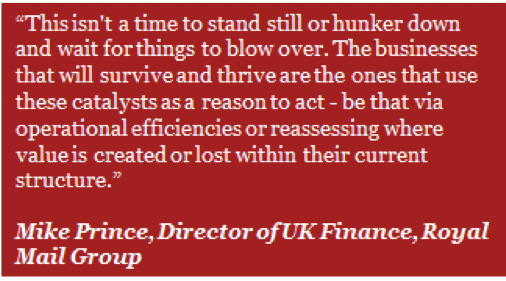
[/one-half]
Successful ZBB programmes can drive out 15-30% of costs
ZBB has become a popular tool for companies to identify and drive operational efficiency. It is especially powerful when organisations have suffering operating margins within declining or slow growth industries. Traditional approaches to these issues has been to run autocratic top-down savings programmes. We caution against this, as it can lead to cutting in the wrong areas, meaning costs creep back in. It can also fail to establish a sustainable cost culture. However, ZBB views the budgeting process from a fresh angle, building future spend from the lowest possible level and addresses the spend culture in the process.
The three crucial pillars for when you are leading a ZBB programme
Visibility
The first step in ZBB is visibility of costs, at the most granular level possible. Spend drivers then need to be justified at this level, rather than projecting spend using a top-down approach, relying on prior period results. Organisations need to review every transaction and classify these into cost categories, enabling better visibility of spend.
Recently, a European Postal Operator faced declining volumes and increased competition. They wanted to implement ZBB across their third party spend. Each category reviewed in turn against cost drivers (Specification, Demand, Price etc.) to identify savings. More on this is in the case study below.
Accountability
One critical feature of ZBB is ensuring that owners are held accountable to their budget targets and any variations to plan are challenged. Clear reporting lines, roles and responsibilities ensure that employees understand their responsibilities for their spend areas. Organisations should also put in place performance plans linked to budget performance and to incentivise staff further.
Governance
Successful ZBB programmes also foster proactiveness through disciplined monitoring. Organisations can achieve this through standardised reporting – fixing the number of days after month closing, with each budget owner reporting up.
Jump-starting your ZBB culture
ZBB is an ongoing exercise, and employees need to be engaged in the process to encourage debate about the best use of resource in the organisation. However, instilling a ZBB-mindset requires buy-in up front. Typical change management strategies, such as clear communication about the purpose of the programme, sharing good examples of progress and strong leadership buy-in help create momentum.
Related articles:
https://pwc.blogs.com/deals/2019/02/zero-based-budgeting-as-easy-as-1-2-3.html
https://pwc.blogs.com/deals/2018/12/dont-believe-the-hype-zero-based-budgeting-is-about-providing-more-choice.html

Members of The IFT saved an estimated almost 60,000 jobs in 2024-25.

IFT members helped add £2.8 billion in shareholder value in 2024-25.

IFT members report high demand for turnaround support.

Nearly 60% of stressed companies don’t know they are in trouble until it is too late.

You can find our 2025 Awards edition of Swift here, featuring articles from and interviews with our 2025 annual awards...

We are pleased to share below a recent interview with our CEO Milly Camley and Valtus UK. The original article...

The Institute for Turnaround (The IFT) is hiring for a Membership Executive. We are the UK’s leading membership organisation for...

You can find The IFT’s Review of 2025 here. This includes a summary of our events, research and other projects...